Introduction
In every romantic journey, there comes a moment when two people must pause and ask themselves what exactly they are building together. Are we just dating casually? Are we exclusive? Are we moving toward something serious? This defining moment is what relationship experts and social media call the DTR conversation short for “Define the Relationship.” It’s a phrase that has become one of the most searched relationship terms in 2025, reflecting the modern need for clarity in an age of uncertainty.
Whether you’ve been seeing someone for a few weeks or a few months, the DTR talk can feel intimidating. Yet, it’s also one of the most empowering steps you can take for emotional health and relational honesty. Understanding how to define the relationship isn’t just about labels; it’s about emotional alignment, communication, and mutual respect.
Understanding What DTR Really Means
Defining the relationship is about creating clarity between two people regarding what they mean to each other and what they both want moving forward. In simple terms, it’s the conversation where both partners discuss their expectations, boundaries, and intentions. In the past, relationships followed clearer paths dating led to commitment, which led to marriage. But in today’s culture of “situationships,” online dating, and endless options, defining the relationship has become more complex and necessary than ever. The DTR talk helps prevent confusion and emotional misunderstandings. It ensures that both partners are on the same page, reducing the risk of one person believing the relationship is serious while the other views it as casual.

Why Defining the Relationship Matters
Having the DTR conversation isn’t about putting pressure on the other person; it’s about protecting your emotional well-being. When expectations remain unspoken, assumptions take over. One partner may think daily texting and weekend meetups mean exclusivity, while the other may assume it’s still open dating. Clarity allows both individuals to move forward with mutual understanding. It strengthens emotional safety, which is essential for trust. Research in relationship psychology shows that couples who communicate openly about expectations experience higher satisfaction and lower conflict rates. In short, defining the relationship brings peace of mind. It eliminates the guessing game and replaces uncertainty with emotional security.
When Is the Right Time to Have the DTR Talk?
Timing is everything. The DTR conversation should happen when a consistent emotional connection has formed not too early, but not so late that assumptions turn into disappointment.

Typically, signs that it’s time to define the relationship include:
- You’re spending a lot of time together and talking daily.
- You’ve introduced each other to friends or family.
- You’re starting to feel emotionally attached.
- You want to know where it’s heading before getting more invested.
If you’re asking yourself, “What are we?”, it’s usually time for the talk. Avoid having the conversation in moments of tension or conflict. Choose a calm, private setting where both can speak honestly and without distractions.
How to Start the DTR Conversation
Approaching the DTR talk with confidence and emotional maturity makes all the difference. Here are a few ways to begin without sounding confrontational:
- “I really enjoy spending time with you and I’d like to talk about where we see this going.”
- “We’ve been seeing each other for a while, and I just want to make sure we’re on the same page about what we’re looking for.”
- “I value our connection and want to understand what this relationship means to you.”
These openers set a warm tone rather than creating pressure. The goal is not to demand a label but to invite an honest conversation.
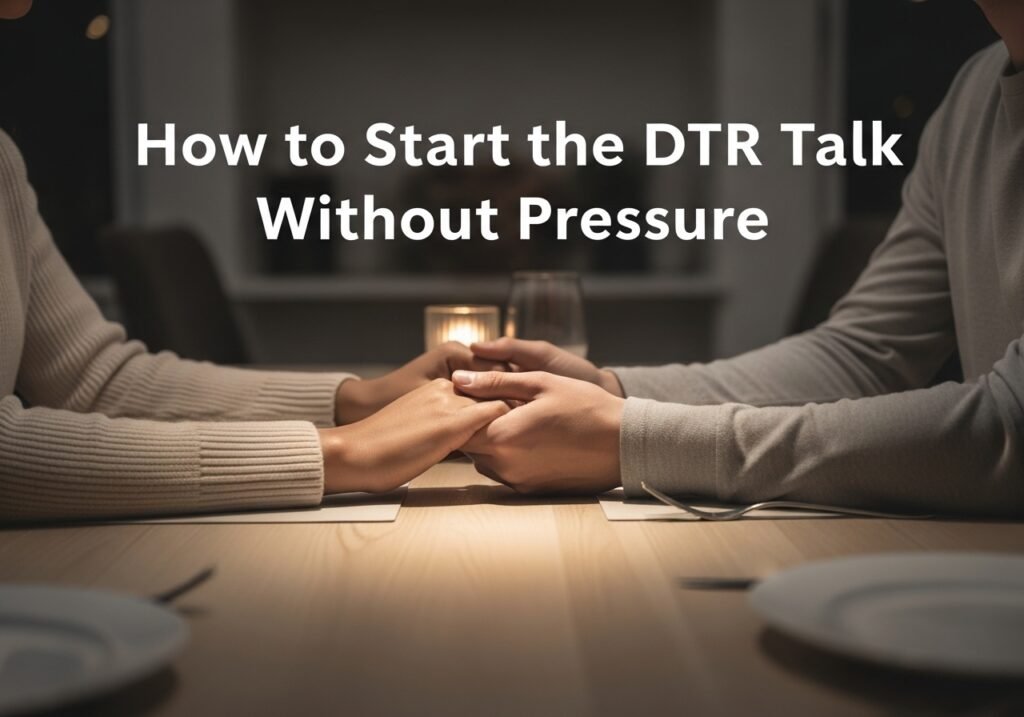
Common Fears Around DTR and How to Overcome Them
Many people avoid the DTR conversation because they fear rejection or awkwardness. What if they don’t feel the same way? What if it ruins what we have? These are valid fears, but avoiding the talk often leads to deeper emotional pain later. It’s important to remember that clarity cannot harm a healthy connection. If someone truly values you, they will appreciate your honesty. If they don’t want the same things, it’s better to know sooner rather than invest in a one-sided relationship. Having a DTR conversation is not about forcing commitment; it’s about understanding compatibility. You are not asking for promises, just honesty. This mindset makes the conversation less intimidating and more empowering.

What a Healthy DTR Conversation Looks Like
A successful DTR talk is two-sided. Both people share their feelings, listen openly, and respect each other’s perspectives. Honesty and empathy are the foundation.
Here’s how a healthy DTR conversation flows:
- Start with appreciation. Express what you value about the connection.
- Be clear about your needs. Say what you’re looking for whether exclusivity, casual dating, or emotional clarity.
- Listen without judgment. Allow the other person to speak freely.
- Clarify next steps. Decide together what this means whether to continue casually, become exclusive, or re-evaluate.
Remember, defining the relationship doesn’t have to mean labeling it as “boyfriend” or “girlfriend” immediately. It can simply mean agreeing on mutual expectations like honesty, exclusivity, or communication frequency.
When the Conversation Doesn’t Go as Planned
Not all DTR talks end in mutual agreement. Sometimes, one person isn’t ready for commitment, while the other is seeking clarity. Although this can be painful, it’s also liberating. Knowing the truth allows you to make emotionally healthy choices instead of waiting for something uncertain. If your partner avoids the conversation or dismisses your feelings, that’s valuable information. It may signal emotional unavailability or lack of interest in deeper connection. In such cases, it’s important to honor your needs rather than settling for ambiguity. Defining the relationship is not just about togetherness; it’s about self-respect. You deserve someone who values clarity as much as you do.

DTR in the Digital Age
Social media and online dating have changed how people connect. The rise of “talking stages,” “situationships,” and “almost relationships” has blurred emotional boundaries. That’s why the DTR conversation is more relevant than ever. People often fear losing freedom by defining the relationship, but in truth, clarity enhances connection. When both individuals know what they want, they can build trust and emotional intimacy without confusion. Even in casual dating, discussing expectations like exclusivity, communication style, or emotional honesty can prevent misunderstandings. The modern DTR conversation is about emotional responsibility, not control.
How to Handle the Outcome Gracefully
Whether the DTR talk leads to a defined relationship or not, handling it with grace builds emotional maturity. If both agree on the same vision, celebrate that clarity and set healthy boundaries moving forward. If the other person expresses uncertainty, avoid trying to persuade them. Instead, express appreciation for their honesty and decide if that aligns with your goals. Emotional self-respect means knowing when to stay and when to walk away. Whatever the outcome, remember: initiating this conversation shows courage, self-awareness, and emotional intelligence qualities that attract healthy love in the long run.

Conclusion
Defining the relationship is not a milestone to fear it’s a moment of truth that brings emotional safety and genuine connection. When two people communicate their intentions openly, they build a foundation based on honesty rather than assumption. The DTR conversation is not just about asking “What are we?” It’s about saying, “I care enough about this connection to make sure we’re aligned.” In the end, clarity is love. Knowing where you stand doesn’t complicate a relationship it strengthens it. Whether it leads to commitment or closure, defining the relationship always brings you one step closer to authentic emotional freedom.
FAQS
1. How do you know when it’s time to define the relationship?
You’ll usually feel it when the relationship starts moving from casual fun to emotional investment. If you’re spending a lot of time together, communicating daily, or feeling emotionally attached, it’s time to talk about what it means. The DTR conversation helps clarify intentions before assumptions lead to confusion or heartbreak.
2. What if the other person avoids or rejects the DTR conversation?
If your partner isn’t ready to define the relationship, it’s important to take their response seriously. Avoid forcing a label instead, listen to what their hesitation reveals. Sometimes, it means they need more time; other times, it shows they’re not seeking the same level of commitment. Either way, clarity allows you to decide whether to wait or move forward independently.